
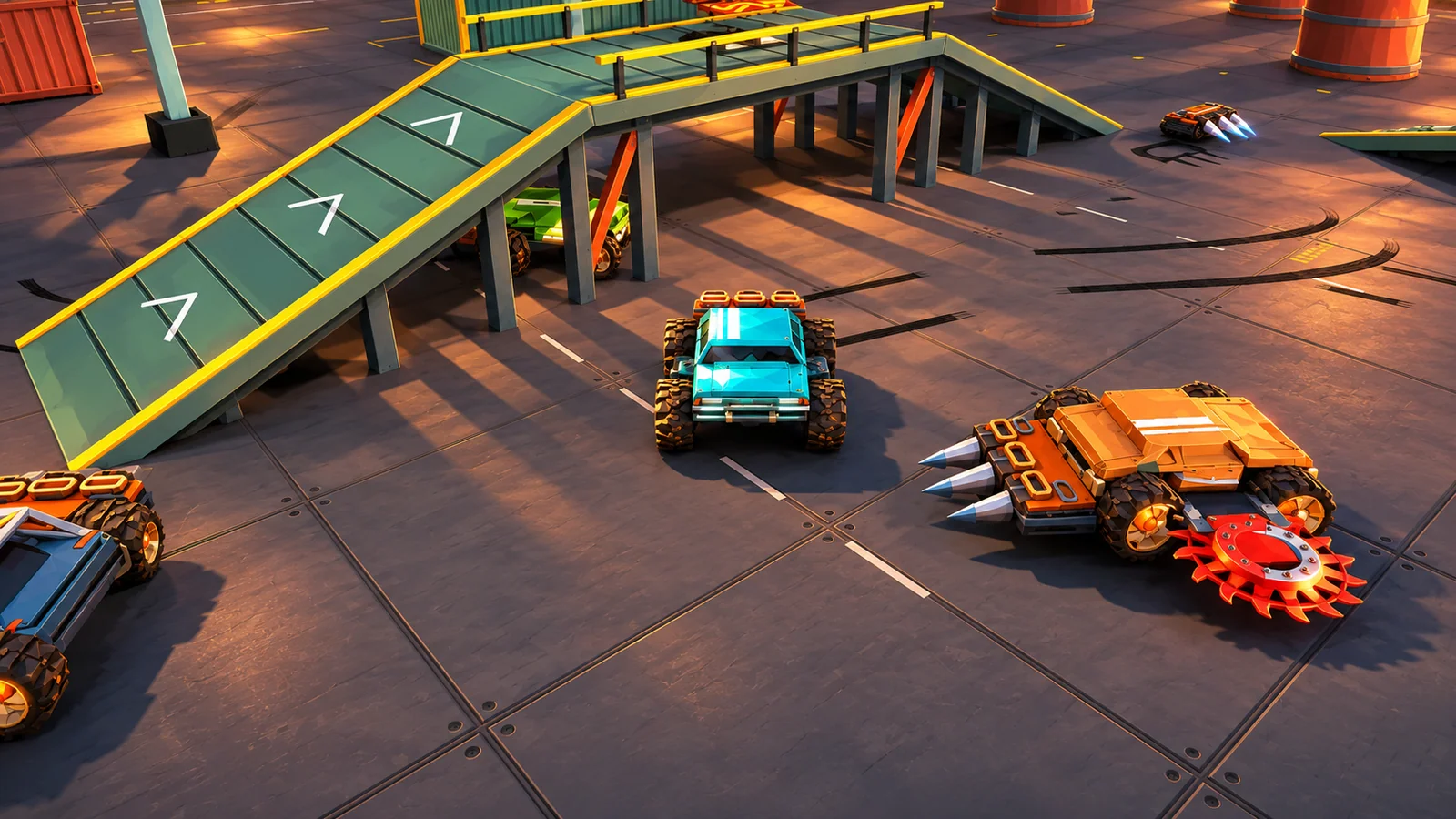
Choose where to fit the flipper, time a second launch and find the side angle that triggers a barrel roll at maximum tier.
Approach with the fitted face
The flipper works automatically when it faces the other car and reaches the body. With a front fitting, drive the nose into the side of a rival crossing your lane. With a right-side fitting, bring the opponent alongside on your right. Leave enough room around the pickup side of the car to turn back after the launch.
Allow time to reset
At its first tier the flipper needs 1.75 seconds to reset after a launch. Two copies increase its lift. Five copies shorten the reset to 1.12 seconds, which makes a second contact in the same skirmish more practical. While it resets, follow the landing spot or clear the traffic gathering around you.
Roll a rival at ten copies
The final upgrade adds a barrel roll on side hits. The condition depends on which face of the rival you reach. A front-mounted flipper can roll a rival by catching their flank. A side-mounted flipper that meets their nose still has the launch, but that approach misses the side-hit opportunity.
Put the working edge on the correct side
A flipper acts automatically when its working edge reaches an opponent’s body. Its direction comes from the mount. A front flipper is easy to point at a crossing target. A right-side flipper needs the rival on Tinker’s right as the two cars meet. Choosing a side mount does not mean every side collision will trigger a launch. The working face of the fitted part must be oriented toward the other car and close enough to reach its chassis.
For an early experiment, keep the starting spike rack on the nose and select Right before driving over the first loose flipper you choose. The fitting notice and mount card should both identify that slot. Find a broad area well away from the deck rails. Steer so that a rival passing alongside will come into the projecting plate on your right. A small correction toward the rival is easier to judge than a sharp turn sending the nose across their lane.
Choose between a lift and a ram
A flipper contact gives the other car lift, a shove and some rotation. A body ram can also toss a rival about because it transfers momentum. The FLIPPED caption helps distinguish a successful flipper hit from the general commotion of two car bodies colliding. If you see only Clash, the projecting fittings may have met each other before the plate reached the chassis. Give the second approach more room to reach an exposed face.
Consider a rival coming toward the nose of your flipper-equipped car. A direct meeting with their front rack puts the rack in the way. Let the front of the rival pass across your approach and catch a side panel with the plate. There is no separate fire key to time at the point of contact. Use your attention on that change of angle and on the space the opponent can land in once the lift begins.
Learn the reset by following a single rival
At the base tier a launch starts a 1.75-second reset. During that time a different rival might move directly against the plate without producing an immediate second launch. The flipper needs the reset period even if the first target has already landed or disappeared behind another car. Choose somewhere to drive while it recovers. Following the first rival’s landing line often gives you a better second attempt than sitting still in the middle of traffic.
Five total copies reduce the reset to 1.12 seconds. That is a difference of 0.63 seconds per successful cycle. For a rough field comparison, look for two opponents passing the same junction in quick succession. The shortened reset can make the second opportunity usable when the base plate would still be recovering. It does not guarantee the second hit. Check that Tinker is facing the second car with the working edge after the first launch changes everybody’s position.
Use mass to understand different-looking launches
The flipper’s leverage depends partly on the mass of Tinker relative to the rival. A flipper weighs nine kilograms and the other fitted weapons contribute their own weight. A heavily equipped opponent can respond differently from a car carrying a single starting rack. A second complication is the direction both cars are already traveling. The target keeps motion as the flipper adds lift and a shove, so two launches from similar-looking positions can finish in different places.
At two total copies the plate gains extra lift. To see the difference clearly, try approaching from a similar angle on a relatively flat patch of the yard. A rival already moving up the central ramp can travel a spectacular distance without giving you a fair comparison with a flat-road launch. Watch the instant the wheels leave the ground, the direction the body turns and the time available to move clear. Those observations are more useful than guessing a fixed flight distance from one strike.
Line up a barrel roll at the final tier
The ten-copy flipper rolls a rival when the impact comes sufficiently from the rival’s side. The useful reference is their car. A front-mounted plate arriving squarely at their door can do it. Your own left-mounted plate meeting their rear as they pass can launch them without producing the same side-hit roll. To practice, use a rival crossing the end of a container row and aim for a window after the nose clears the cover.
Leave some road after the contact so you can watch the body rotate and still steer Tinker safely. If several cars pile into the landing point, pass around the outside and look for a follow-up once the reset has completed. The points rule still depends on a credited knockout. An impressive roll can leave a healthy target very much in the heat. Check the small hull bar or the knockout feed before you decide that it is time to look for a new opponent.
Turn an unsuccessful lift into a correction
If the rival stayed on the ground, first check the mount card. Did you pick up a flipper as a new part, or did a duplicate upgrade an existing fitting somewhere else? Next think about the last successful launch. A second hit immediately afterward can fall inside the reset. Finally check the contact itself. A rail or a projecting weapon between the plate and the chassis can prevent the expected result even when the two car centers are close on the radar.
If the rival lifted but landed in an awkward place, adjust the route before changing the equipment. On the South Straight there is room to drive beyond the contact and watch the landing. Between the eastern tanks the same lift can turn the field into a tight group where no second approach is clear. One clean launch, a patient turn during the reset and another attempt from an open side teach the tool more reliably than repeatedly driving into the pile and hoping for another flip.
Check the drop after a finishing launch
When a launch earns a knockout, the wreck leaves one of the rival’s equipped weapons. A flipper dropping from that car counts as a matching copy for your fitted plate. Look at the mount card before leaving the area. A change from four copies to five shortens the reset for your next pass, a difference you can try as soon as the next two opponents arrive together.
If the dropped part is a different type and you have explicitly selected the flipper’s own card, steer around it or clear that preference before collecting it. Otherwise you may replace the tool that scored the knockout.